

For Michigan well owners
Well water treatment in Michigan, matched to what your test says
About 1.12 million Michigan households draw their water from a private well, and roughly 15,000 new domestic wells are drilled every year, per EGLE. When a lab report lands on the kitchen table, the numbers on it decide what happens next. A licensed local contractor reads that result and quotes the right fix. The quote is free and carries no obligation.
A free referral service. All testing and treatment work is performed by independent licensed professionals.
Get Your Free Quote
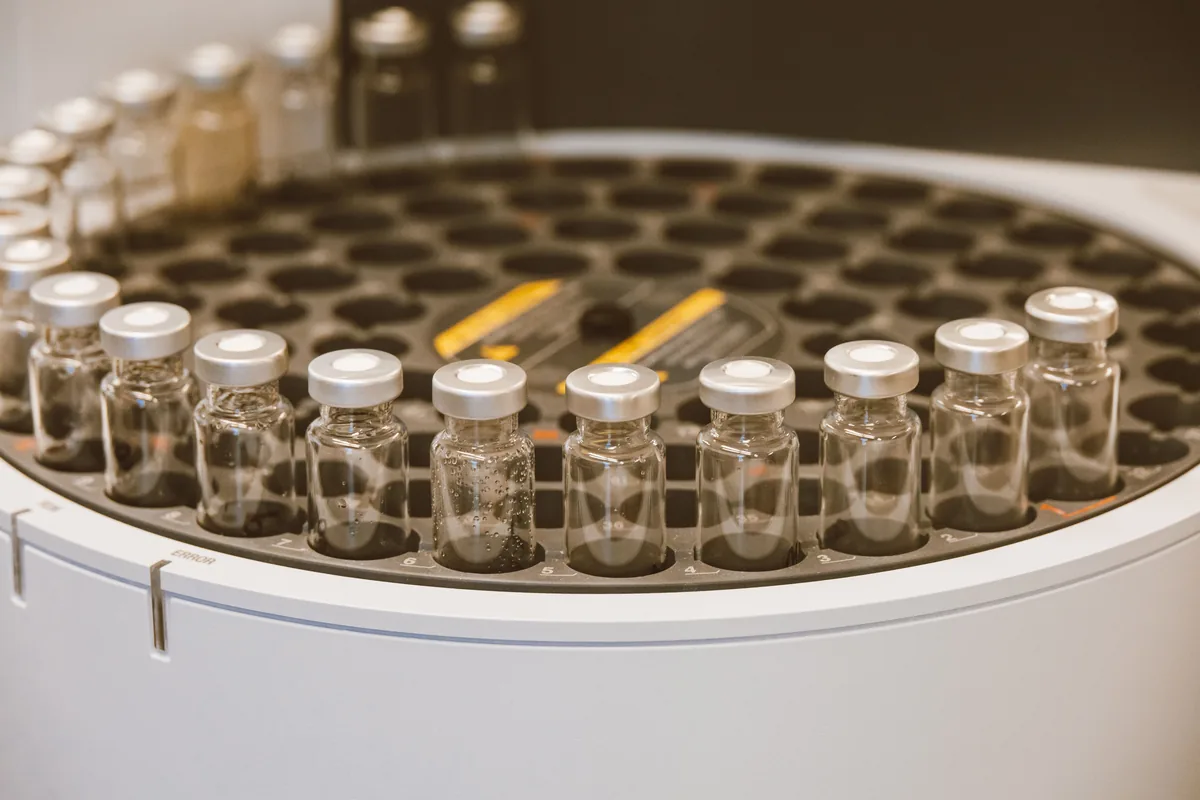
Test first, treat second
No honest contractor sizes a treatment system without a lab result, and nothing on this site pushes you toward equipment before you have one. Michigan makes testing easy to act on: county health departments run well water programs, EGLE certifies drinking water labs across the state, and when the state funded a free testing round in 2023, about 15,000 kits were requested in roughly a week, per EGLE. Demand like that says Michigan well owners want to know what is in their water.
So the path here is deliberately plain. If you have not tested, start there. If you are holding a result, bring it. Either way, your contractor works from measured numbers, not from a sales script.

The result-in-hand path
-
Get the water tested
Through your county health department or an EGLE-certified drinking water lab.
-
Read the report
Compare each line against the state and federal limits, band by band.
-
Get a quote from a local pro
A local contractor quotes the technology that fits the numbers.
Where most Michigan well problems land
Arsenic removal
The Marshall Sandstone under the Thumb and Southeast Michigan carries some of the highest natural groundwater arsenic in the country. If your report shows arsenic, this is the page to read.
About arsenic treatmentWhole-house treatment
When a report shows more than one problem, iron plus hardness plus an odor, a systems-level fix at the point of entry usually beats three separate gadgets.
About whole-house systemsYour well test, explained
Arsenic, iron, manganese, nitrate, hardness, coliform, PFAS: what each line on a Michigan well report means and which numbers call for action.
Open the test guideMichigan well water is a geology story
The arsenic in Thumb-area and Southeast Michigan wells is natural. It comes from arsenic-rich pyrite in the Marshall Sandstone aquifer, documented by the US Geological Survey (Kolker and others, 2003). In a USGS study of well records across nine Michigan counties, county medians ran from 2.9 ug/L in Washtenaw to 16.6 ug/L in Genesee, and homes drawing from the Marshall Sandstone are more likely to test high. That is a reason to test, not a statewide headline: two neighboring wells can read very differently.
Iron, manganese, and hardness are the everyday findings almost everywhere in the state. They stain fixtures and laundry, scale water heaters, and shorten the life of appliances, and they are the problems most Michigan treatment calls are actually about.
PFAS in Michigan wells is a point-source story with named places: the Wolverine tannery waste plume in Kent County, where one private well tested at about 37,800 ppt and 1,545 wells were sampled; the 2018 Parchment emergency in Kalamazoo County; and firefighting foam at the former Wurtsmith Air Force Base in Iosco County. Michigan has enforced seven PFAS drinking water standards since August 2020, ahead of the federal government (MPART).
Nitrate concentrates in agricultural counties, with a federal limit of 10 mg/L. Nationally, about one in five sampled private wells exceeds at least one health benchmark, per the USGS, and geologic contaminants dominate that count. None of this reads the same in every county, which is exactly why the quote starts with yours.
How you get your quote
Step one
Tell us about your water
County, water source, your situation, and any contaminant you already know about. It takes about two minutes, and a test result in hand makes the quote sharper.
Step two
A local pro reads your numbers
Your request goes straight to a contractor who works your county and deals with your aquifer's problems, usually within about an hour during the day, whether that is Thumb arsenic or Kent County iron.
Step three
You decide
The contractor visits, looks at your setup, and gives you a written, itemized estimate. Compare it, question it, or walk away. You owe nothing either way.
Three ways people arrive here
A result in hand
The lab report came back and a number is above a limit, or close to one. This is the moment for a quote keyed to the exact finding.
Buying a home with a well
The inspection or the lender put the well on your checklist. Testing before closing tells you what the house really costs, and a quote handles whatever the test finds.
Stains, smells, or scale
Orange streaks, a rotten-egg smell, crusted fixtures. Symptoms point somewhere, but a test confirms it, so the honest first step is testing, and we say so.
What it costs, and what happens after you send it
- What does well water treatment cost in Michigan?
- There is no single price, because the contaminant decides the system. Across published national ranges, an under-sink reverse osmosis unit runs $300 to $950 installed, the common whole-house treatment classes run roughly $1,000 to $5,000, and whole-house reverse osmosis is the expensive end at $4,800 to $8,000 (HomeGuide, 2026). Those are national figures, not Michigan averages: no source publishes a Michigan average, so this site does not claim one. Your lab report is what moves a quote inside or past a range, and The water test itself has no single price here: county health departments, EGLE-certified laboratories and state-funded free rounds all price differently. The Michigan cost guide prints the full table by system with every source.
- How fast will someone get back to me?
- Your request goes to an independent licensed local water treatment contractor, usually within about an hour during the day. That contractor then reviews your lab report and quotes the work in writing on their own schedule.
- What work is covered?
- Arsenic removal, iron and manganese removal, nitrate removal, PFAS treatment, sulfur odor treatment, water softening, and whole-house well water treatment. See every service.
Only a contractor standing at your well can price your actual water.
Questions Michigan well owners ask
Who installs the treatment system?
An independent licensed local contractor handles the installation from start to finish. The sizing, the equipment choice, and the work itself all belong to that professional, and your contract is directly with them.
Do I need a water test before requesting a quote?
No, but testing first is the honest path, and it is what the state recommends. Your county health department and EGLE-certified drinking water labs can test your well for a modest fee. If you already hold a result, the quote gets faster and more specific, because the contractor can quote the right technology on the first visit.
What does well water treatment cost in Michigan?
It depends on the contaminant, your water chemistry, your household flow rate, and the technology the situation calls for. A single-tap fix costs far less than a whole-house system. Your contractor provides a written, itemized estimate before any work begins, so you can compare it line by line.
Which parts of Michigan are covered?
Coverage is Michigan statewide. The deepest local coverage sits where the well problems concentrate: the Thumb and Southeast Michigan counties over the Marshall Sandstone arsenic belt, and Kent County with its documented PFAS history and widespread iron and hardness. The form asks for your county so the quote is local.
Free well water treatment quotes in Michigan
Tell us about your well and your test result, if you have one. A licensed local contractor sizes the fix from your numbers and quotes it in writing, free and with no obligation.
Monday to Friday, 8 AM to 5 PM Eastern
Updated